

The system has a series of Physical, biological and chemical steps and processes through which incoming SWW effluent undergoes to attain desired effluent quality by time of discharge. Processes are summarized below.
Primary Screening: This process involves removal of a large non-biodegradable and floating solids such as plastics, tins, containers. Its easily separates and remove large matter, rocks, grit, metals carried along way by raw water which might negatively affect the treatment procedures.
Screens material – non corrosive media i.e., treated steel, stainless steel or plastic media
Screens of different grit placed as per the drawings
NB/ Screening starts from SWW collection boxes, screens should be accessible, not be fixed to ease service and cleaning.
Primary Settlement/ anaerobic digester tank:
Provides effective primary effluent settlement and also allows anaerobic digestion to take place. 80% organic matter is reduced over the process in this stage. Anaerobic & aerobic microbial culture and required enzymes are dosed and mixed with the effluent at this stage.


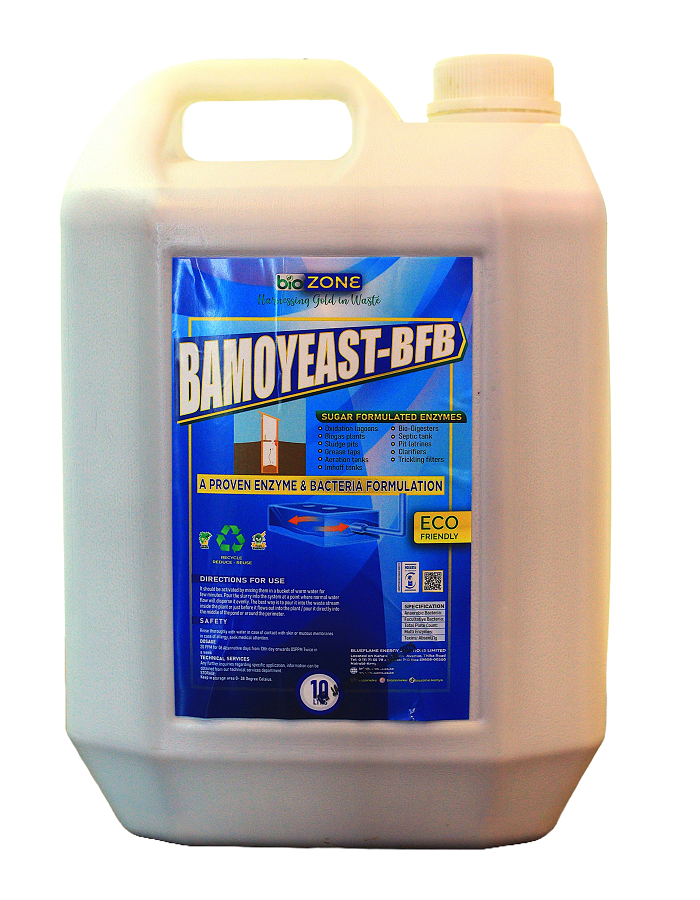
Benefits of Sewage Waste Water Stabilization Bacteria & Enzymes
1. Sludge volume will be reduced more as more solids are digested
2. Removes bad odor
3. Sludge will be easier to pump, process and dewater and will have less odor too
4. The capacity of the system will be effectively increased, because more waste can be processed, more effective in less time.
5. Balance the treatment system
6. Bacterial oxidation of the liquid phase will be faster and more complete
7. Digesters will operate evenly and uniformly for easier planning and routine.
Features & Operation Methods
Expansion and Equalization/sewage collection tank: This is buffering process for peak influent loading into the plant providing desired stabilization on aeration process. provided to balance / smooth high levels of variations in the influent wastewater flows, expected during the peak flow periods. This chamber also takes excess displaced slurry by the digester especially when the biogas is not in use.
Aeration: includes Double stage regenerative air compressor to supply air to the fine bubble disk diffusers to Introduce air evenly into the bioreactors breaking down the organic matter by aerobic digestion. The system combines both anaerobic and aerobic digestion to ensure optimal breakdown of organic matter before discharge into the environment. Aerated water overflow into MBR reactor, more than 85% of the organic matter is decomposed by aerobic microbial, most microorganisms and organic matter were intercepted in aerobic tank, in microbial bed aerobic plant, BOD COD fell more than 95%, NH4-N feel more than 98%, SS fell more than 99% in this process.
Membrane Bio-Reactor referred to as MBR, it is the membrane separation technology, it is different from the activated sludge process. Separation of solid and liquid without sedimentation tank, but using microfiltration membrane separation technology to replace the traditional activated sludge method and conventional filtration unit. It has high efficiency of solid-liquid separation. Complete separation of the water take place in a very minimal retention time (HRT) and sludge age (STR). Using the characteristics of the membrane, the activated sludge is not lost with the flowing water, concentration of activated sludge can keep 8000~12000 mg/L in the biochemical pool, so that pollutants can decompose completely. The treated effluent/ water quality discharged is good, stable, free from water bacteria, suspended solids and turbidity is close to zero. can be used directly, for example: car wash, green water, landscape water, flushing toilets etc.
Disinfection Final treatment stage for effluent killing any present microorganisms before discharge to environment.
NB/ for irrigation chlorinated water should be stored for some time to deplete chlorine.
Desludging: returns settled sludge from the clarifier back to sludge collection tank
Control panel The plant is fully automated by PLC; the motors are protected through thermal overload, lamps for normal operation and over loads, and a siren for electricity failure, overloads and flow
Sizing Information
We are flexible to install any size from 4000 liters depending on the population and wastewater generated daily
| MODEL | VOLUME | MAXIMUM FLOW DAILY |
|---|---|---|
| BZMBR4 | 4M3 | 500L |
| BZMBR6 | 6M3 | 1,500L |
| BZMBR8 | 8M3 | 2,000L |
| BZMBR12 | 12M3 | 3,000L |
| BZMBR16 | 16M3 | 4,000L |
| BZMBR24 | 24M3 | 6,000L |
| BZMBR36 | 36M3 | 9,000L |
| BZMBR40 | 40M3 | 10,000L |
| BZMBR240 | 48M3 | 12,000L |
Benefits of the System
NEMA Effluent Treatment Guidelines
The system provides treated water as per NEMA Schedule 6 Guidelines (Table 1.0)
which is suitable for irrigation use, and cleaning of cars and pavements.
| PARAMETER | GUIDE VALUE |
|---|---|
| PH | 6.8 – 8.5 |
| Biological Oxygen Demand (5 days at 20 oC) | 30 (mg/L) max |
| Chemical Oxygen Demand | 50 (mg/L) max |
| Suspended Solids | 30 (mg/L) max |
| Ammonia –NH4 + Nitrate-N03 + Nitrite –N02 | 100 (mg/L) max |
| Total Dissolved Solids | 1,200 (mg/L) max |
| E.Coli | Nil/100 ml |
| Total coliform | 1000/100 ml |
| Color | Less than 40 hazens |
Applicable Areas
1. The system eliminates use of an exhauster as is the case of septic tanks. Additionally, there is no need to worry about soak pit in the area filled with clay soils.
Low electricity consumption.
3. Quiet operation.
4. No need of separating grey water from black water in case of sewer wastewater treatment
5. The system automatic operation, you just to routine patrol and add the engine oil for the air pump every two months.
6.It can effectively remove suspended matter, organic matter, ammonia nitrogen and other pollutants in the wastewater.
Applicable to all kinds of wastewater quality.
residential, apartments, institutions to municipal sewage.
8. Industrial wastewater, i.e. chemical, pharmaceutical, food processing, slaughter houses and other industries.
9. t is suitable for high-protein and high-starch wastewater generated by food.
10. Industries such as freezing plants, canning plants, and beverage plants.
11. Wastewater generated by poultry farms and slaughterhouses.
12. Wastewater purification in alcohol production industries such as beer, malt, and rice wine factories.
13. Wastewater treatment generated by high-concentration alcohol-containing chemical plants.
14. Car wash wastewater
GET IN TOUCH